
Is feed withdrawal affecting your results? What every producer should know
Broiler chickens: feed withdrawal prior to slaughter
The restriction of feed and water for broiler chickens before slaughter is a common practice and, in some countries, it is regulated by legislation.
The duration of the restriction varies depending on geographic region, bird type, distance to the processing plant, type of farm, target market, country, among other factors.
It is generally recommended that this restriction be between 8 and 12 hours prior to loading.
The reasons for feed withdrawal include:
Improved animal welfare during transport
A reduction in mortality
A lower risk of carcass contamination during evisceration
Reduction in feed waste
A possible improvement in carcass quality issues such as pale, soft, and exudative meat
However, this practice may also lead to physiological and behavioral changes induced by stress, as well as an increased risk of carcass contamination during evisceration.
It is also important to note that feed withdrawal time is often confused with resting time at the processing plant. Sanitary regulations in some countries require a minimum resting period for birds.
Commercial broilers are therefore subjected to total fasting time, which includes feed withdrawal on the farm, transport time, and holding time at the processing plant.
Poor handling throughout the process—combining feed withdrawal, catching, transport, and holding time at the plant—can increase weight loss, affect carcass quality, and reduce shelf life.
It must be considered that the last 12 hours of a broiler’s life are the most stressful, and any measures aimed at reducing stress can have positive results in terms of weight loss reduction, carcass quality, and shelf life.
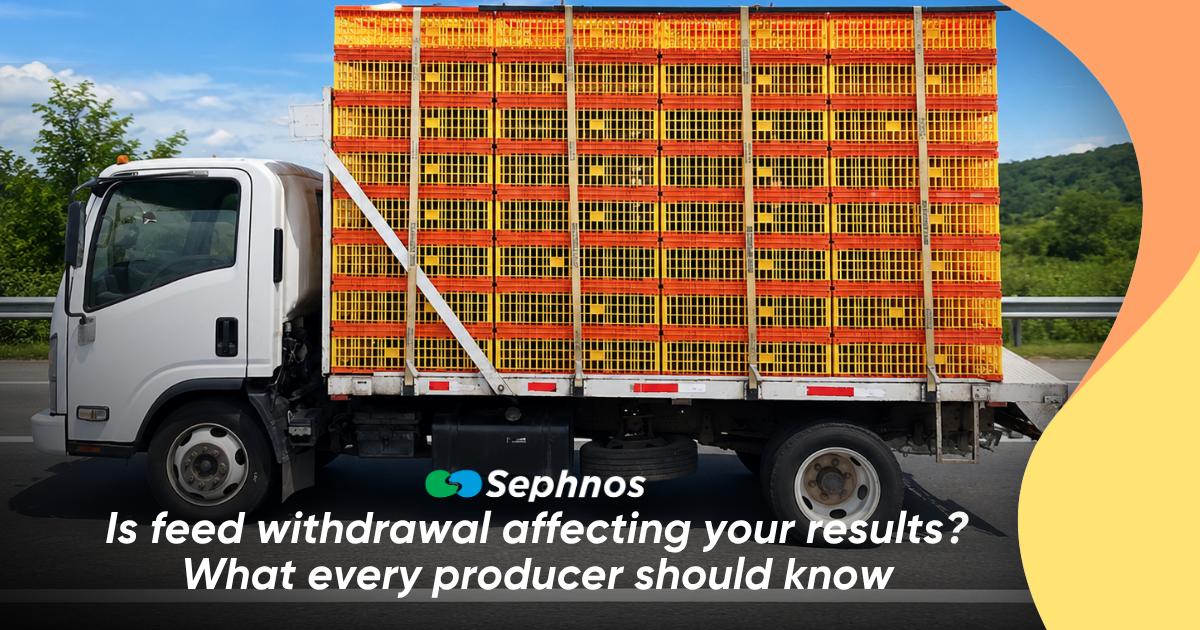
Weight losses are unavoidable, but results can be improved if each stage of the process is optimized. For example, transport crates with more ventilation openings provide better air circulation, which helps reduce internal heat buildup and consequently lowers heat stress. Likewise, poorly designed transport crates can increase damage to wings, legs, the head, or other external body parts due to inadequate internal structure (floors, roofs, and walls).
This final 12-hour period is undoubtedly the most stressful and significantly affects final broiler performance, reducing economic returns for producers and distributors. This issue requires attention from an interdisciplinary group to evaluate actions that can help reduce losses.
It is important to consider that new regulations will become increasingly strict regarding food chain quality, animal welfare, human welfare, and environmental impact. Without a doubt, this final stage of broiler production will continue to generate strategies aimed at reducing the negative effects across the entire broiler production process.
For more information, please contact Sephnos. We have information and products that may be of interest to you.